Why Bitcoin: The Base Layer of Freedom Tech
Two weeks in the Mediterranean, one question at every dinner table: why does a social media company need Bitcoin? The answer is about freedom, not price.
I just spent two weeks on a cruise ship in the Mediterranean with my wife, from Barcelona to Rome. Sicily, Athens, Santorini, Ephesus, Mykonos, Olympia along the way. If you've never done a cruise, here's the deal: you sit at dinner with strangers every night, and sooner or later the conversation lands on the same question.
"So what do you do?"
I build freedom tech on Nostr and Bitcoin. Say that at a dinner table of normal, nice people and you get the polite nod. It doesn't land anywhere they can grab onto, so eventually someone asks what that actually means.
Say "I work in social media" and they perk up. They know that world. Are you an influencer? Do you work at one of the Big Tech companies? Those questions I can answer in one sentence.
The Nostr and Bitcoin version takes longer. Nostr is usually new to everyone at the table, and Bitcoin comes with a lot of baggage. But I can count on where it ends up.
At dinner, at a cruise ship bar, on a shore excursion, the question nobody could get past was the same: why does a social media company need Bitcoin?
I want to answer that properly, because it's the right question. And the answer has nothing to do with price charts.
The example I kept reaching for
When people asked what we actually build, I stopped leading with the apps. I led with the people.
At Soapbox we build Agora, a fundraising platform for people who can't safely use GoFundMe. GoFundMe isn't bad. The people who need Agora most just can't use it. We built it alongside Venezuelan opposition leaders and human rights defenders. The people who use it include activists in countries where the government freezes bank accounts the moment you organize. Where payment processors pull out rather than cross sanctions regimes. Where a fundraiser can be switched off from thousands of miles away by a company that has never heard your name.
For those people, Bitcoin was never a debate. What else is there?
That's usually where the dinner table went quiet.
Check your financial privilege
The best thing I've ever read on this is Alex Gladstein's book Check Your Financial Privilege, from the Human Rights Foundation. He opens by lining up the loudest critics. Charlie Munger called Bitcoin "disgusting." Warren Buffett called it "rat poison squared." Then comes the verdict: "They are wrong, and they are blinded mainly by their financial privilege."
If you live in a country with a stable currency, functioning banks, property rights, and a government that mostly leaves your accounts alone, Bitcoin looks like a solution in search of a problem. A speculative toy. Weird internet money.
But that's not most of the world.
In the essay that became the book, Gladstein lays out the numbers:
"only 13% of our planet's population is born into the dollar, euro, Japanese yen, British pound, Australian dollar, Canadian dollar or Swiss Franc. The other 87% are born into autocracy or considerably less trustworthy currencies. 4.3 billion people live under authoritarianism, and 1.2 billion people live under double- or triple-digit inflation."
- Nigeria, where the Feminist Coalition was funding the EndSARS protests until the regime shuttered its bank accounts. "Bitcoin was the only option left," as Gladstein tells it. They spun up a BTCPay server, Jack Dorsey shared the link, and they raised more than 7 BTC. Frozen out of banking, still able to receive support, because nobody can freeze Bitcoin.
- Argentina, where inflation eats your savings every year and people have spent generations getting creative just to preserve value.
- Belarus, where the BYSOL solidarity fund (founded days into the 2020 protests) has paid millions of euros to workers fired for striking and organizing, much of it in Bitcoin, because it was the only rail the regime couldn't sever.
- Sudan, Cuba, Afghanistan, Venezuela, places where the banking system itself collapses, or the money does, or both.
Gladstein's point, and HRF's whole body of work on financial censorship, is that when we in the West say "I don't need Bitcoin," we're really saying "my money works for me." Congratulations. Seriously. But understand that you're in a minority. By population, the people whose money works against them vastly outnumber us. For them, in Gladstein's words, "Bitcoin is a protest, a lifeline and a way out."
That's what I was explaining between the shrimp cocktail and the second wine pairing. I wasn't talking about number go up. I was talking about money that can't be turned off.
Why Bitcoin specifically
People would counter, reasonably, with "fine, but why Bitcoin? Why not Venmo, or a bank wire, or one of the ten thousand other coins?"
Because Bitcoin is the only option with the properties the job requires, all at once:
No issuer. Nobody prints it, nobody administers it, nobody can be pressured, bought, or legislated into turning off your money. There is no customer service number, and that's a feature. There's also no compliance department that can suspend you.
Censorship resistance at the protocol level. A Bitcoin transaction doesn't ask permission. It doesn't check your politics, your sanction list, your flag. It just settles. That's how the system is built.
Open to anyone, 24/7, without an application. No KYC gate you can fail, no branch you have to visit, no minimum balance. A human rights lawyer and a dictator use the same network under the same rules.
Actually mature. Seventeen years without the ledger being rolled back or the network being shut down. For people risking their freedom, "it usually works" isn't good enough.
I'll be honest about where I stand: most of the crypto landscape outside Bitcoin is a casino. Gambling degens, scammers, charlatans, and VCs pumping their own bags. Monero is the one exception I'll grant. Its privacy is real, and it's genuinely useful for people who need it. But when the audience is an activist whose opponent is a nation-state, you bet on the boring, battle-tested, most-secure network on earth.
The rails under the freedom tech stack
Here's how I explained our stack on the ship, and how I'll explain it here.
Freedom tech is the idea that the important layers of your digital life shouldn't depend on a company that can be pressured:
- Sovereign communication: Nostr. Your identity is your keys. No algorithm between you and your audience, no server that can delete your account.
- Sovereign intelligence: open AI tooling you run and configure yourself, that doesn't report your questions to a platform.
- Sovereign money: Bitcoin. The base layer. When the banks close, it's what keeps the other two alive.
Each layer needs the others. Nostr without Bitcoin is speech with no way to fund it. Bitcoin without Nostr is money with no way to organize around it. That's why a "social media company" uses Bitcoin infrastructure: speech and money are the same fight. The moment either one has a kill switch, both are conditional.
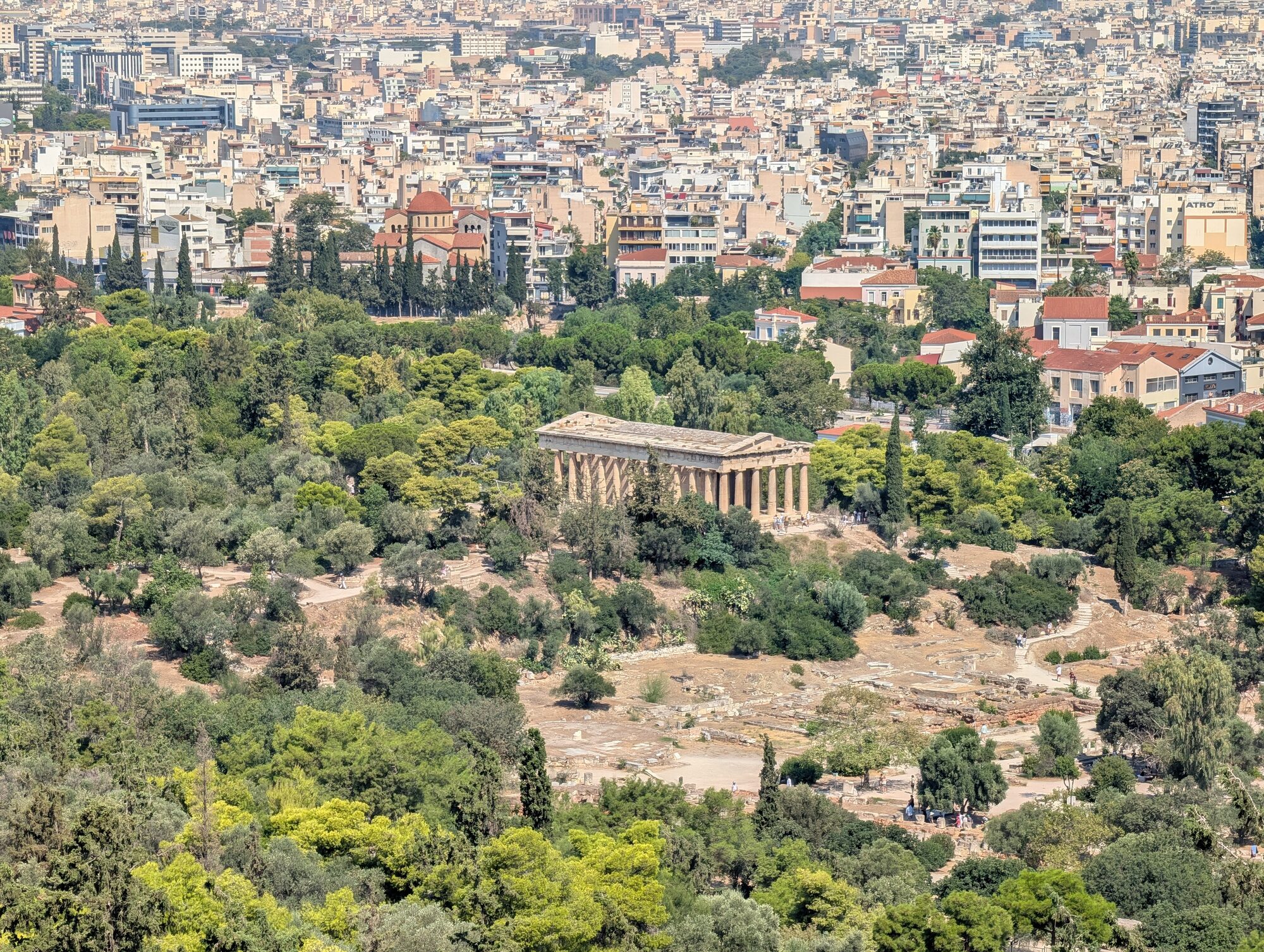
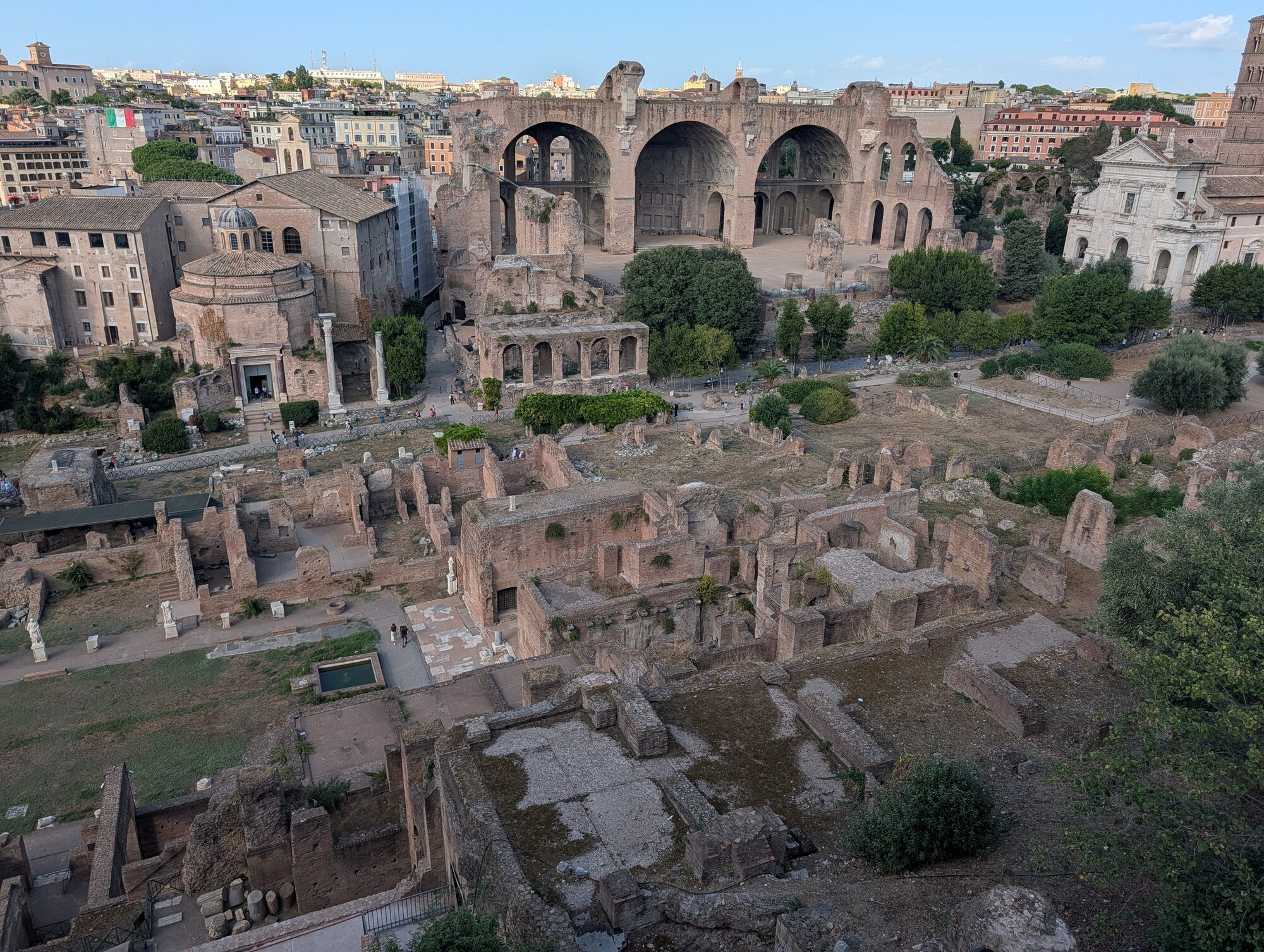
The last stop on the trip was Rome, so I saw the Roman version too: the Forum. The Greeks had the agora, the Romans had the Forum. Two empires, same instinct: a civilization needs a public square, a place where citizens show up and speak. Ours lives on company servers now, and we've seen how that goes. Nostr is the new square. Bitcoin is what keeps it standing when the pressure comes.
What that looks like in practice
Concretely, Agora fundraises in Bitcoin, on-chain, with Taproot and Silent Payments. No custodian holding the money. No platform fees shaving the top. A donor in one country can support a campaign in another, and 100% of it arrives. The campaign can't be chargebacked into oblivion or deplatformed by a payment processor that got a complaint.
When we relaunched Agora at the Oslo Freedom Forum, campaigners put up more than 60 campaigns in the first days and moved thousands of dollars directly to recipients. Peer to peer, permissionless, from strangers who wanted to help. No intermediary said yes or no. That's the product.
The honest part
I'm not going to pretend the objections at those dinner tables were dumb. They weren't.
Self-custody is genuinely hard. Responsibility you can't outsource is the cost of money nobody can freeze, and it's a real cost, especially for people under stress. The price is volatile, and for someone living hand-to-mouth, that matters. And the ecosystem has more than its share of scammers circling the honest core; you have to know how to tell them apart, which is a skill most people shouldn't need.
But here's what I kept coming back to: every one of those problems is a hard problem. The alternative, money that a government or company can switch off, was never a problem for the people at my dinner tables. It's a catastrophe for the people Agora exists for. When your options are "volatile" or "frozen," you learn to love volatility.
The tools will keep getting easier. Wallets improve every year. But the foundation doesn't change: money that can't be turned off, for people who already had everything else turned off.
Why we choose this
So when someone on a ship in the Aegean asks why our company, a social media company (really a freedom technology company, but everything we build is social communication, or facilitates it, so that's the part that fits in a dinner conversation), runs its own Bitcoin nodes and builds on-chain fundraising, the answer is the mission: technology that increases human autonomy. And I mean that concretely: an activist in an authoritarian country can feed their family and fund their work if the banks close tomorrow.
That's the point.
If that resonates, go read Check Your Financial Privilege and take its challenge: "It's time to check your financial privilege." Read the Human Rights Foundation's blog. And look at what campaigners are doing on Agora, real people, real causes, money that arrives.
The internet made speech free. Bitcoin made money free. We're just building the tools where those two meet.
Soapbox is funded by grants and donations, not ads or data sales.
Everything we build is open source and belongs to the community. Help us keep it that way.