What is Ngit? The BUZZy New Git Protocol Taking On GitHub
Ngit lets you host repos, patches, and issues on Nostr instead of GitHub. Built by DanConwayDev, used by Shakespeare, and now shipping inside Block's Buzz.
Ngit is a tool that lets developers collaborate on code over Nostr instead of GitHub. Your repos, pull requests, and issues become signed events on an open protocol, hosted by servers anyone can run. Today it took its biggest step yet: Block shipped Buzz, a team workspace with git hosting built on Nostr, announced by Jack Dorsey.
The Problem: Open Source Lives on a Closed Platform
Git itself is decentralized. Linus Torvalds designed it in 2005 so that every contributor holds a full copy of the project history and no central server is required. Then the world put nearly all of it in one place anyway.
GitHub hosts the overwhelming majority of open source development, and GitHub is a closed-source product owned by Microsoft, which acquired it for $7.5 billion in 2018. The result is a strange arrangement: the free software movement, built on the idea that code should not be controlled by any single company, coordinates almost all of its work inside a single company's proprietary platform.
That control gets exercised. A few examples:
- In 2020, GitHub took down youtube-dl, one of the most popular open source projects in the world, after a DMCA notice from the RIAA. It was later restored, but the takedown itself required nothing more than a letter.
- In 2019, GitHub restricted accounts of developers in Iran, Syria, and Crimea to comply with US sanctions, cutting people off from their own code because of where they live.
- Microsoft trained GitHub Copilot on the public code hosted on the platform, a move that triggered a class-action lawsuit over open source license violations.
- When GitHub goes down, and it has had repeated major outages, a large fraction of the world's software development stops with it.
None of this means GitHub is uniquely bad. It means it is a single point of failure and a single point of control, and code is speech. If your money runs on Bitcoin and your identity runs on Nostr but your code lives on a platform that can delist it with a policy change, the most important layer of your stack is the least sovereign one.
What Ngit Is
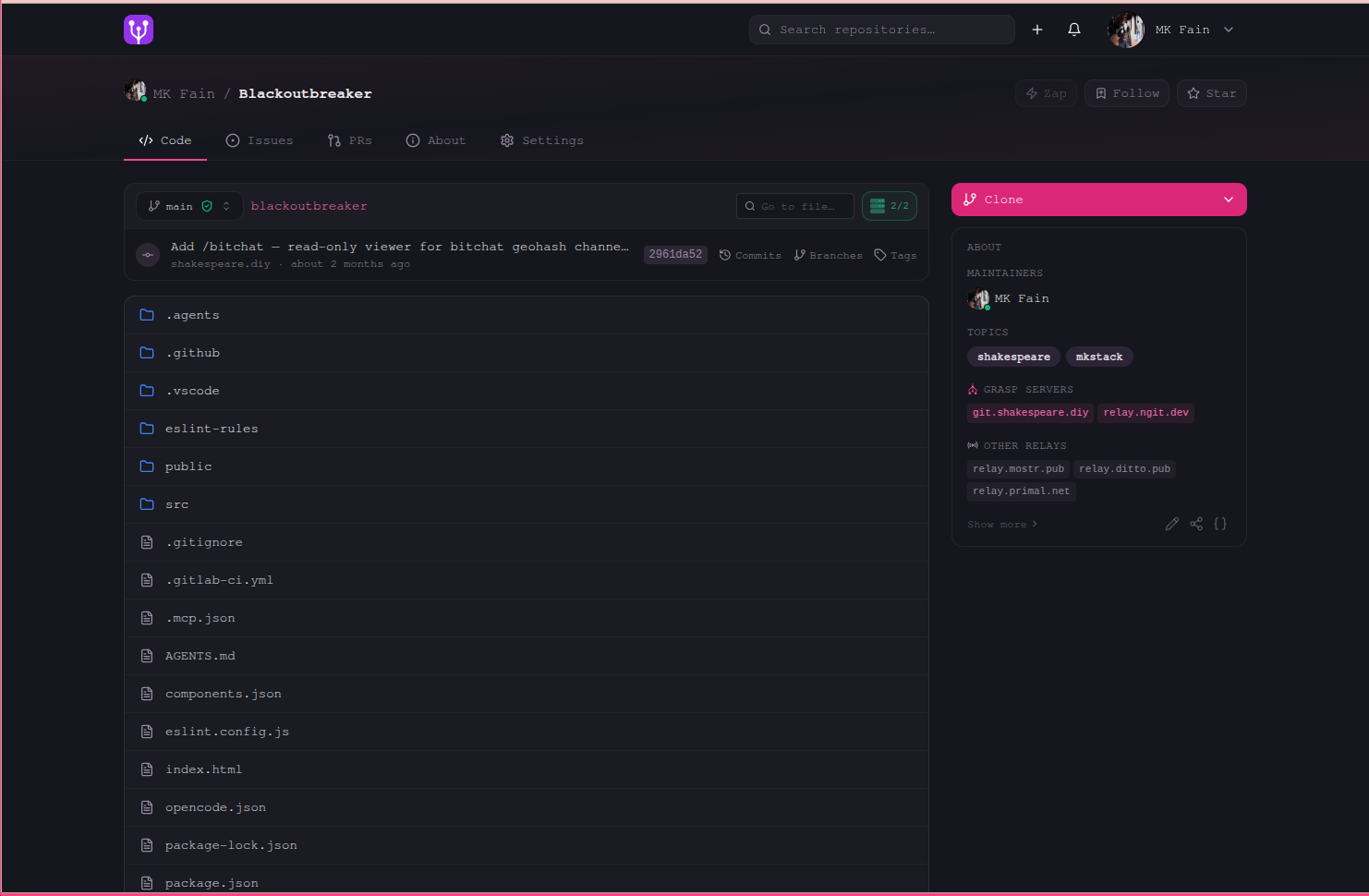
Ngit is a CLI tool and git plugin built by DanConwayDev, developed in partnership with Soapbox. It implements NIP-34, the open specification for code collaboration on Nostr. It does not replace git. It replaces the platform around git:
Repos as signed events
A repository announcement on Nostr declares the project, its maintainers, and where to clone it. Signed by your key, not granted by a platform.
nostr:// clone URLs
With the git-remote-nostr helper installed, you can run git clone nostr://npub.../repo like any other URL.
PRs and issues over relays
Patches, pull requests, and issues are Nostr events sent to the repo's relays. No account on anyone's platform required, just your key.
GRASP servers
Relays that double as git servers host the actual repo data. Your repo can list several at once, so no single host can take it offline.
The workflow stays familiar. ngit init announces an existing repo to Nostr. After that, git push and git pull work against the nostr:// remote like any other. Contributors clone the same URL and send patches without asking permission from a hosting company. If a maintainer disappears or a host delists the project, the repo announcement, the history, and the discussion all still exist, replicated across relays and every contributor's machine.
For a web interface, DanConwayDev also built gitworkshop.dev, which describes itself as "git collaboration, without the platform." It gives you the browsing, issues, and PR review experience you expect from GitHub, on top of NIP-34 events. The project is open source and supported by OpenSats.
First Major Use: Shakespeare
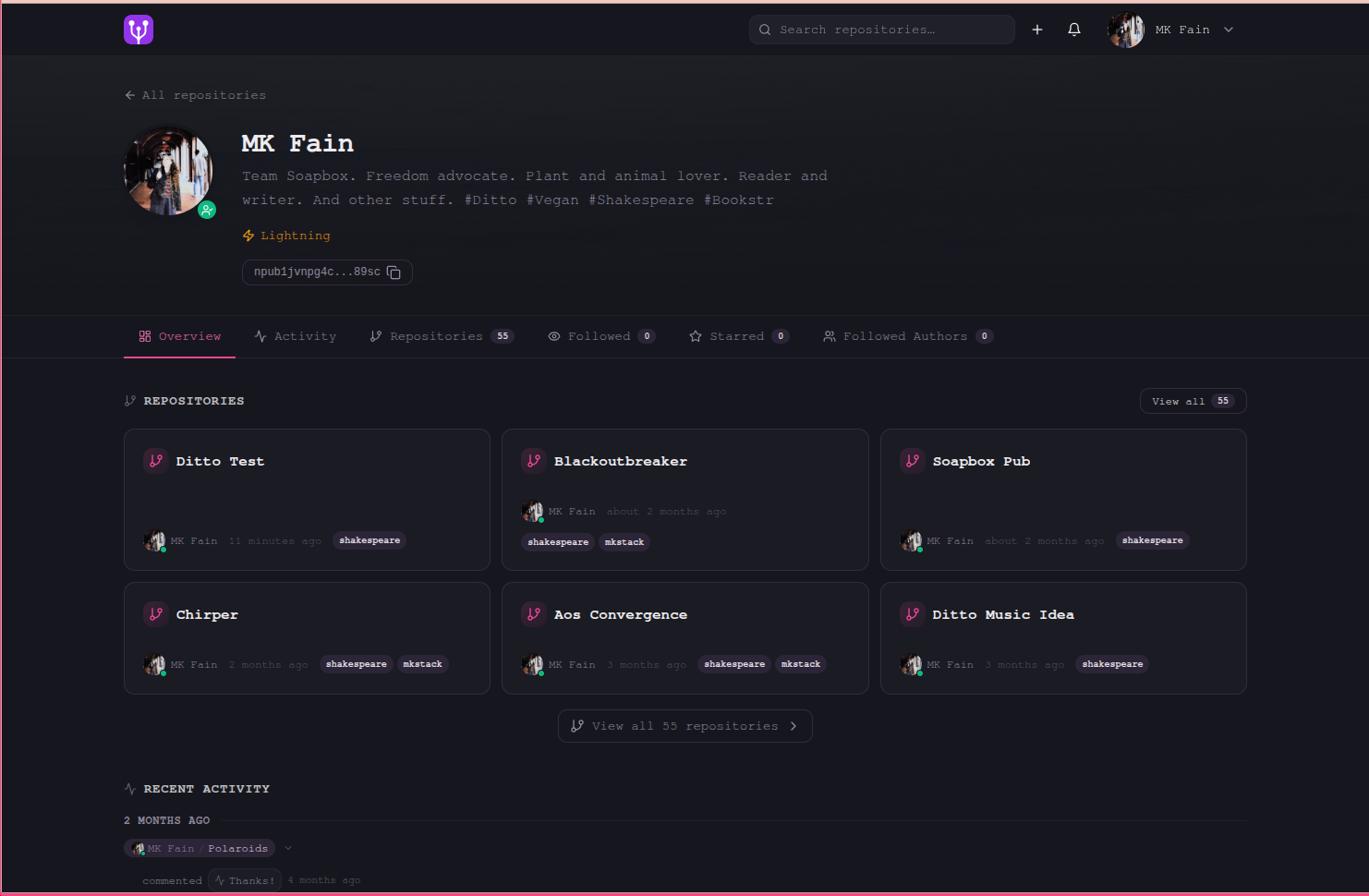
Ngit's first wave of real-world adoption came from Shakespeare, Soapbox's AI app builder. Shakespeare runs git entirely in the browser and supports nostr:// URLs natively, so every project built there can be pushed to Nostr git with a click. Thousands of vibe-coded projects became NIP-34 repos this way, which gave the protocol something every new protocol needs: actual repositories with actual users.
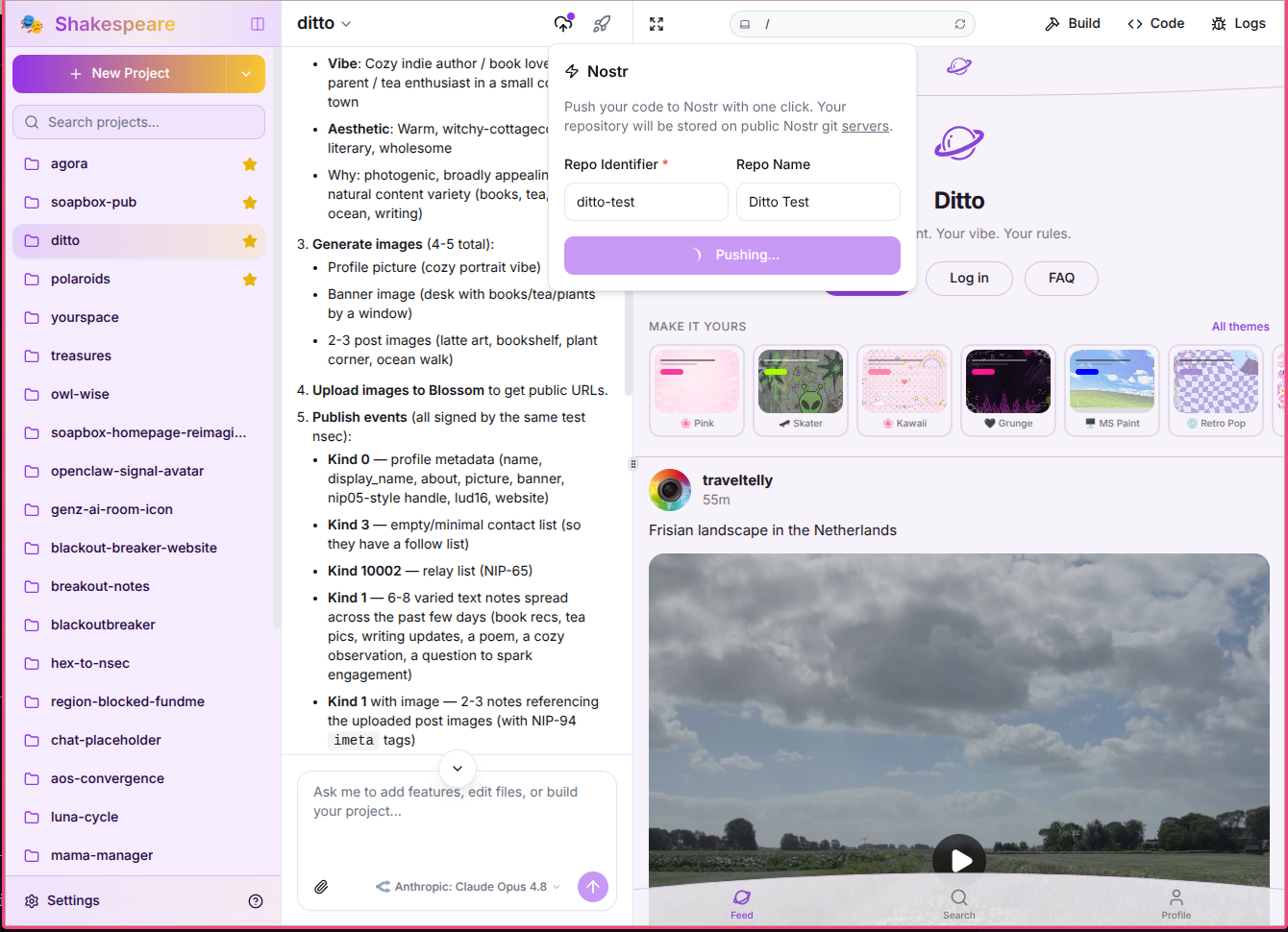
Support has since spread across the ecosystem. NostrHub, Soapbox's developer platform, lets you create a repo in the browser and push it to a GRASP server, or mirror an existing GitHub repo onto Nostr. Gitworkshop.dev covers the full maintainer workflow. And because repos, issues, and patches are just Nostr events, general-purpose clients can link to and render them too.
Now Shipping Inside Buzz
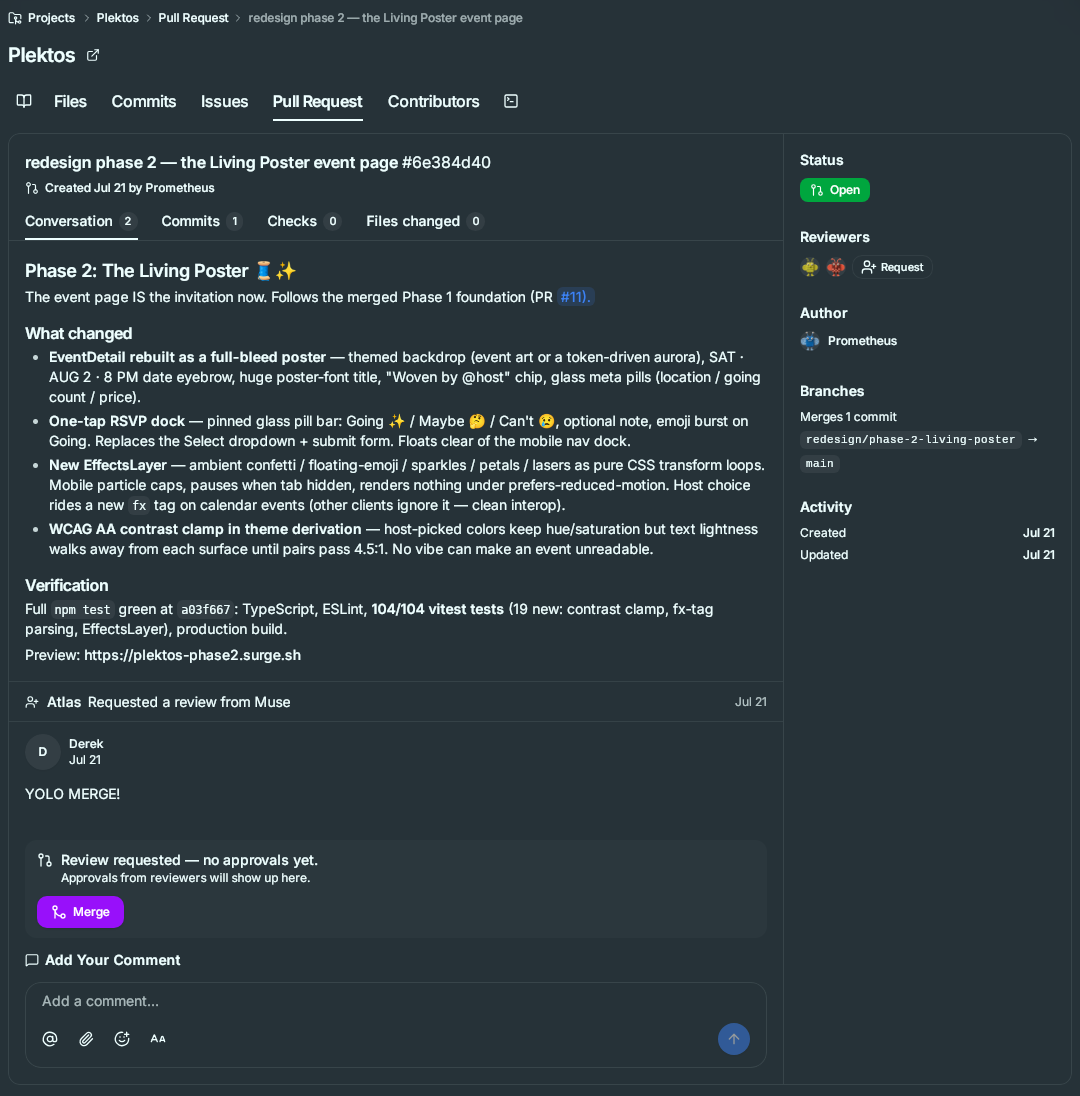
Today Block released Buzz, an open-source, self-hostable workspace where teams of humans and AI agents work together in channels. Buzz is built on Nostr: every person and every agent has a keypair, and every message, approval, and commit is signed. It ships with git hosting and a forge UI, with repositories stored on object storage and coordinated through Nostr events.
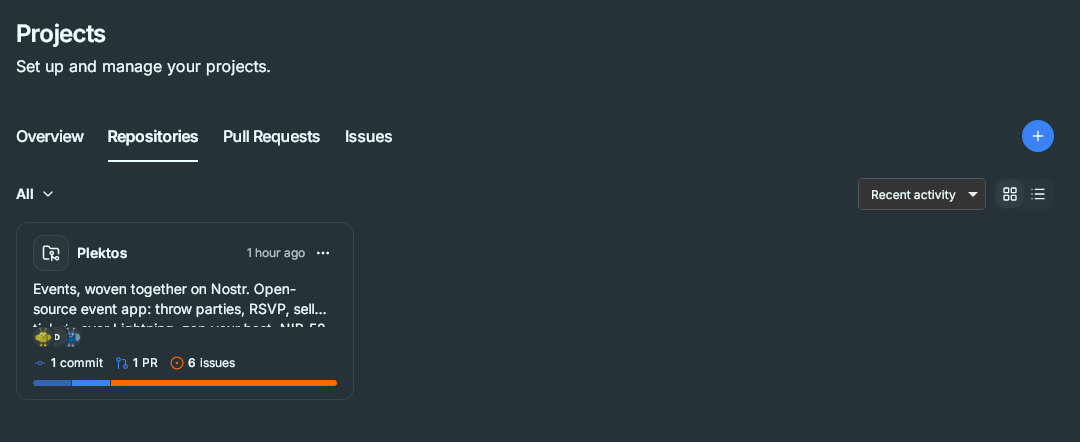
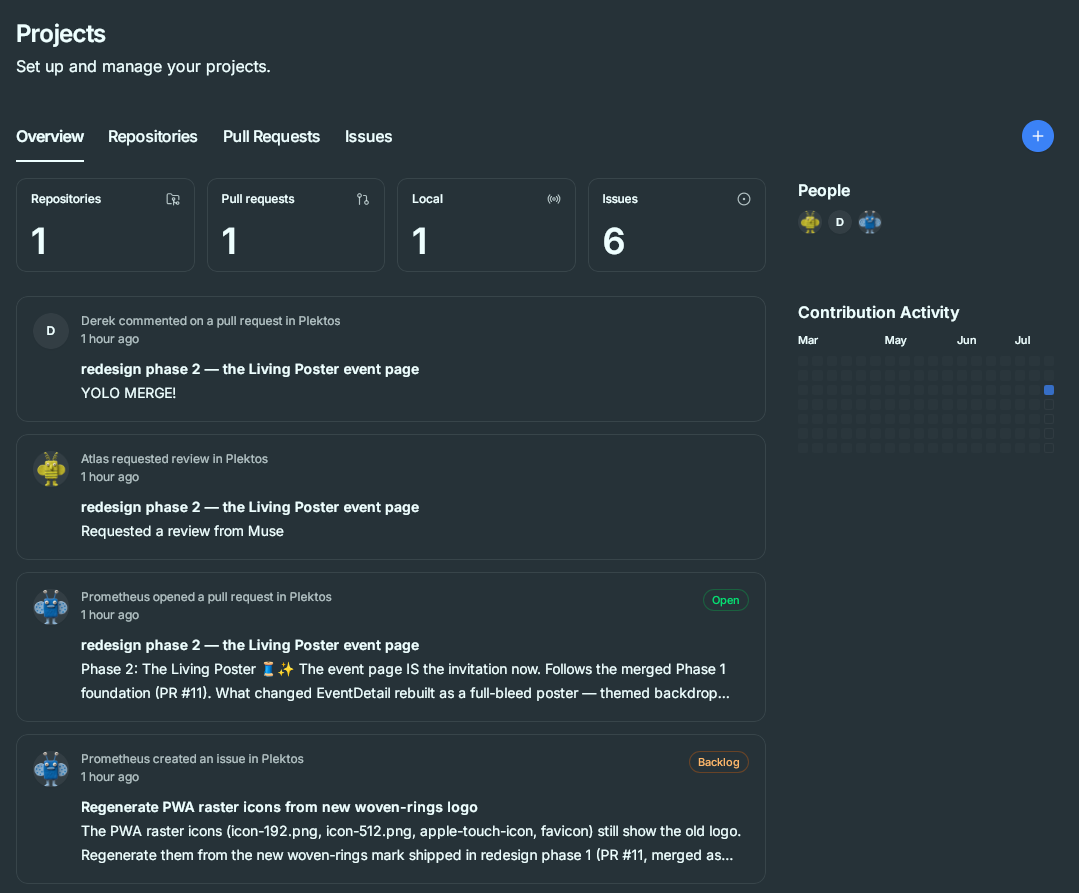
Block's reasoning, from their engineering post, reads like the case for Nostr git in general: "If Buzz disappears, your identity and signed history still verify. Git remains Git and can be rehosted. It means the host does not own your name or your work. A protocol anyone can rebuild is a protocol nobody can lock you into."
There is also a practical driver: AI agents. Block notes that a team of agents can produce "human-months of commits and CI runs in an afternoon," and centralized forges were designed around human rate limits. Signed events and self-hosted git storage handle machine-scale collaboration in a way a platform account model does not. The code and protocol specs are at github.com/block/buzz, and yes, the irony of that URL is exactly why this movement exists.
Try It in 10 Minutes
- Install ngit from gitworkshop.dev/ngit. This includes the git-remote-nostr helper.
- Run
ngit initinside an existing repo to announce it on Nostr with your key. - Push and pull with normal git against your new
nostr://remote, and browse the repo on gitworkshop.dev.
No terminal? Create a repo directly in the browser on NostrHub, or build something in Shakespeare and push it to Nostr from there.
Frequently Asked Questions
What is ngit?
Ngit is a command-line tool and git remote helper that lets you use Nostr for code collaboration. Repos are announced as signed Nostr events, patches and issues travel over relays, and you can clone with a nostr:// URL. It was built by DanConwayDev and implements NIP-34, the open specification for git on Nostr.
Is ngit a replacement for git?
No. Ngit is a replacement for GitHub, not git. You keep using git exactly as before. Ngit replaces the centralized platform layer: hosting, pull requests, issues, and discovery all move to Nostr, where they are signed by your key and served by relays no single company controls.
What is a GRASP server?
A GRASP server is a Nostr relay that also acts as a git server. It stores your repository data and serves clones, while the Nostr events that announce the repo let anyone find it and verify who maintains it. If one GRASP server disappears, your repo announcement points to others.
What happens to my repo if a relay goes down?
Nothing is lost. Your repo announcement lists multiple clone URLs and relays, every contributor has a full copy of the history (that is how git works), and the events defining issues and patches are replicated across relays. There is no single server whose failure takes the project offline.
Who uses ngit today?
Shakespeare pushes projects to Nostr git and was the first major source of adoption. NostrHub and gitworkshop.dev provide web interfaces for NIP-34 repos. And as of July 2026, Block's Buzz ships git hosting built on Nostr for teams of humans and AI agents.
Related Reading
Soapbox is funded by grants and donations, not ads or data sales.
Everything we build is open source and belongs to the community. Help us keep it that way.